Office Pods The Complete Guide

Everything you need to know about office pods — what they are, how

they work, and how to pick the right one.

Rw+Ctr 35 dB

1–6 Person

2-Hour Install

1500+ Projects

The Basics

What Is an Office Pod?

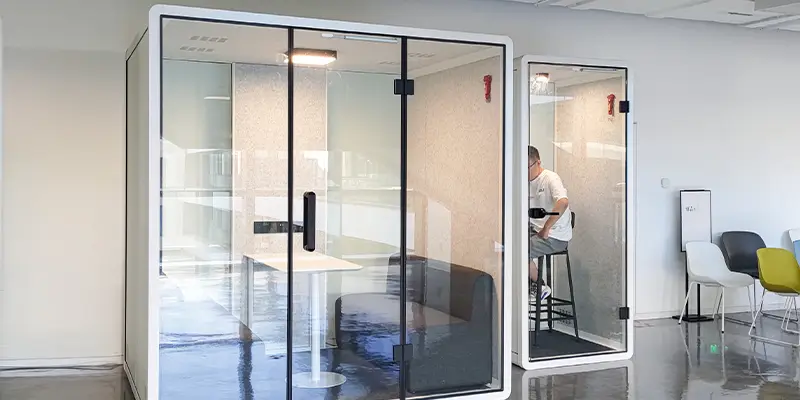
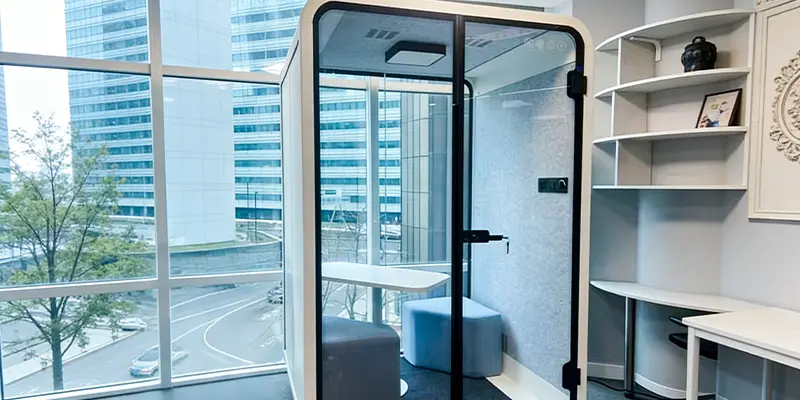
An office pod is a freestanding, sound-insulated room that installs inside an open office in hours — no construction, no permits. It gives teams the privacy of a meeting room at a fraction of the cost and time.

You’ll also see them called acoustic booths, privacy pods, or meeting pods — same category, different jobs: a phone booth serves solo calls, a meeting pod serves huddles, an office pod covers both.

Why are they everywhere now? Open-plan floors keep getting denser while meeting rooms stay scarce, and hybrid schedules mean quiet space has to be available on demand. A pod answers all three at once: office pods for open offices are the fastest route to acoustic privacy without a single structural change. A soundproof office pod also relieves the pressure on HR — confidential calls and interviews no longer need a manager’s office.

This guide covers what pods are, the sizes for 1–6 people, how to choose between series, how they stack up against built-in rooms and acoustic panels, what they really cost, and the questions buyers ask most. If you only need one fact up front: an office privacy pod is a meeting-room-grade quiet space that moves with your lease. It’s the same reason facilities teams book pods as furniture rather than construction — and budget them the same way. When you’re ready to compare models, the full range lives in the booth catalog — every unit ships factory-direct from our 7,000 m² facility in Foshan, China.

Size Guide

Office Pod Types & Sizes

One person on calls, two on interviews, four on daily stand-ups,

six in a workshop — the same acoustic core scales across

four footprints, from a quiet corner to a full team room.

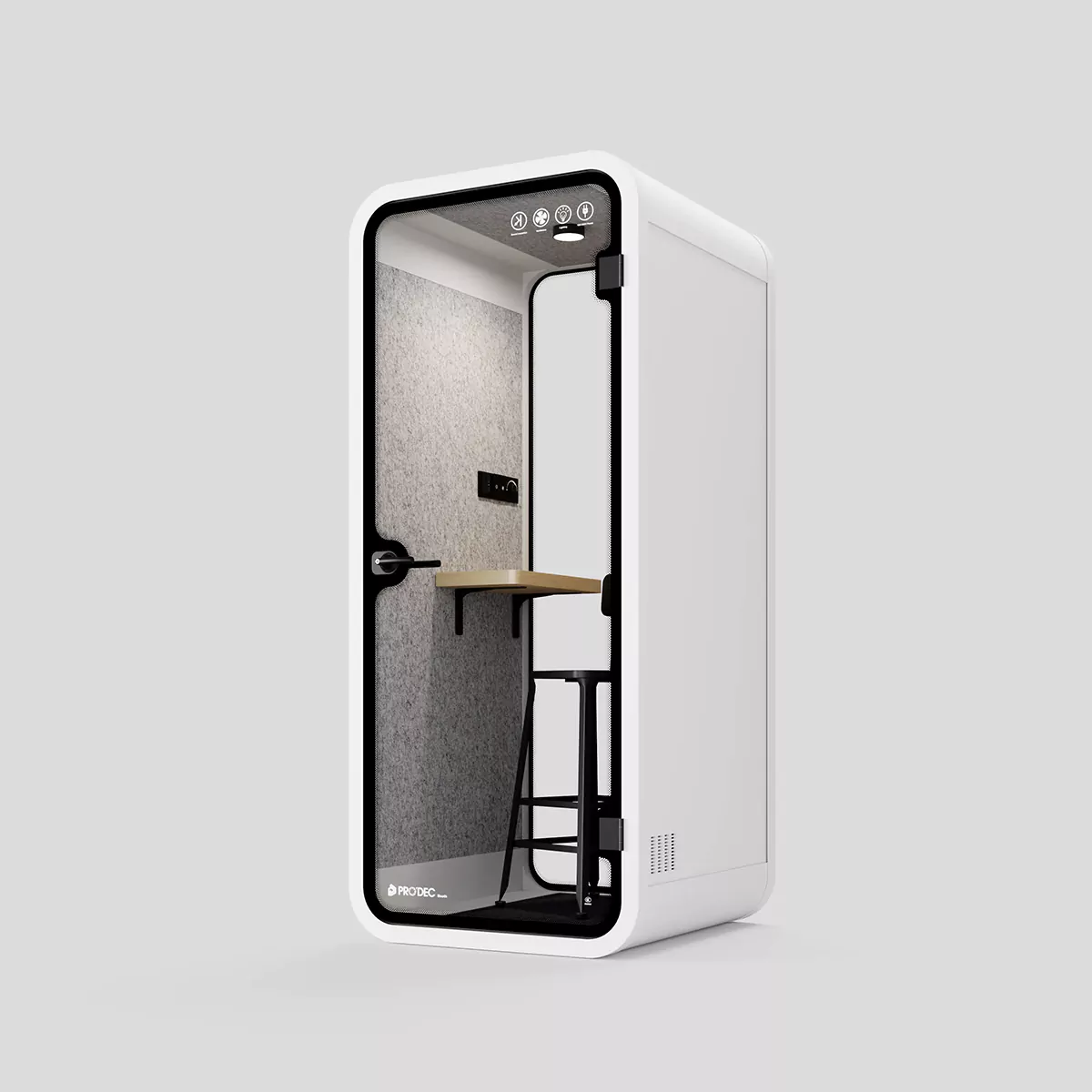
S · 1 Person

1-Person Office Pod

988 × 1010 × 2288 mm

Solo calls, deep focus, and video one-to-ones. The smallest footprint — it fits beside a desk without claiming a whole workstation’s worth of floor plan.

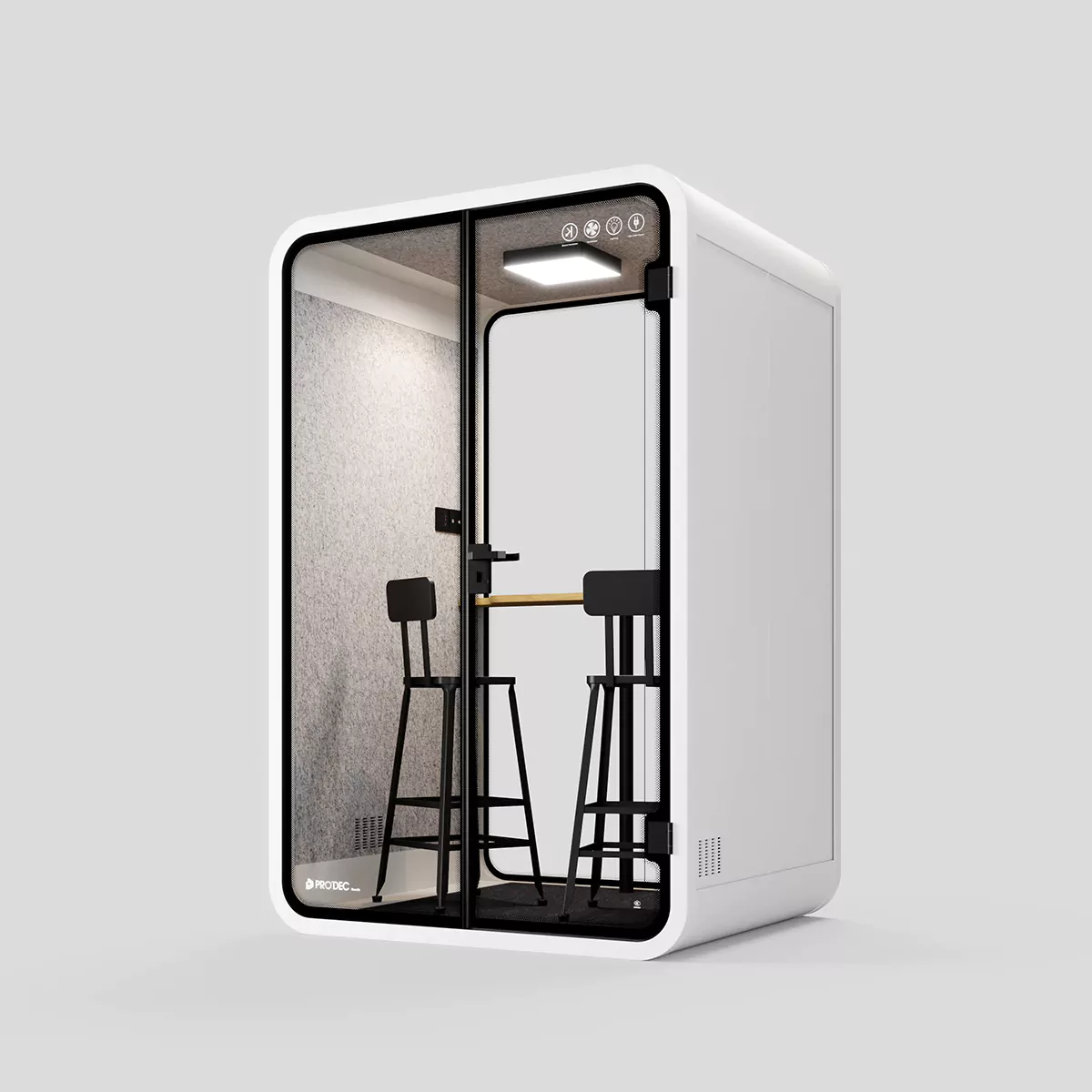
M · 2 Person

2-Person Office Pod

1488 × 1250 × 2288 mm

Interviews, one-to-ones, and confidential conversations. The most-installed size for HR teams and hybrid check-ins.

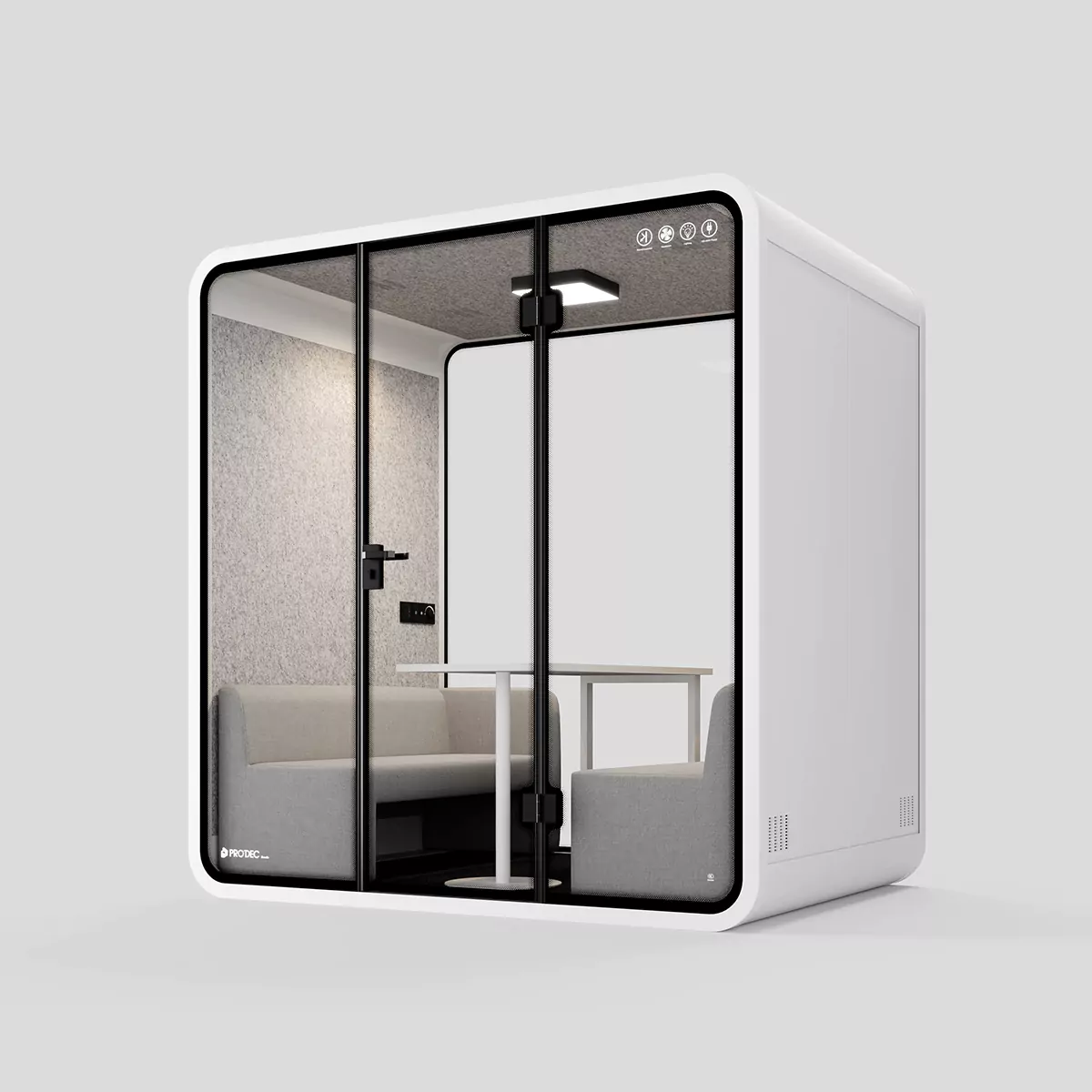
L · 4 Person

4-Person Office Pod

2188 × 1610 × 2288 mm

Daily stand-ups, sprint reviews, and small-team discussions. The workhorse of agile floors.

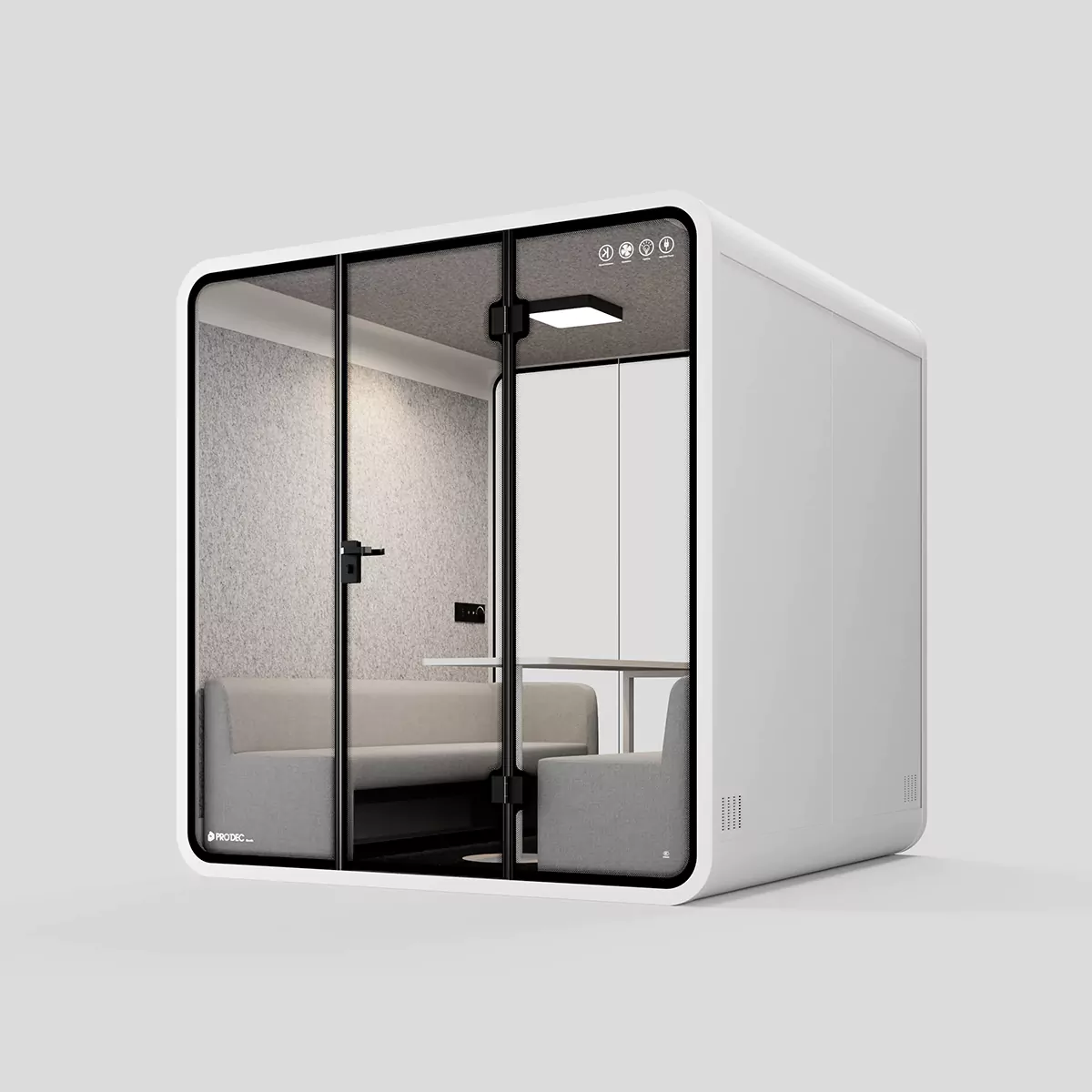
XL · 6 Person

6-Person Office Pod

2188 × 2210 × 2288 mm

Workshops, planning sessions, and client presentations. A full meeting room that needs no walls.

Decision Guide

How to Choose an Office Pod

Four questions separate a pod that gets used every hour from

one that gathers dust.

01/04

How many people?

One → S. Two → M. Four → L. Six → XL. Sizing up is cheaper than buying twice — most teams add a second, larger pod within a year, so leave room in the floor plan.

02/04

What's it for?

Calls suit an S, meetings an L, focused work an S–M, rest or nap use an L–XL. Match the pod to the job, not the other way around — the acoustic performance is identical across sizes.

03/04

How quiet does it need to be?

Every Prodec pod shares the same Rw+Ctr 35 dB core — independently lab-tested by Intertek — so quiet is not a series decision. It's a given, from the entry model up.

04/04

Finish & features

PE Entry keeps the essentials at the lowest price. PR Standard adds 10mm glass and refined finishes. PC Premium adds aluminum-honeycomb walls, a NIC 32 rating, and a Singapore TUV report — our best seller — the series chosen for buildings where acoustic quality is formally audited.

The Comparison

Office Pod vs. the Alternatives

A pod, a built-in room, and acoustic panels solve three different

problems. Here’s the honest breakdown.

Dimension
Prodec Pod
★ Delivered ready
Built-In Room
Traditional construction
Acoustic Panels
On-wall treatment
Privacy & enclosure
✓A private room for 1–6 people, wherever it's needed
✕A room — but weeks of construction and a fixed location
✕No enclosure — panels soften noise but create no private space
Time to ready
✓2-hour flat-pack assembly
✕3–6 weeks including permits and fit-out
✕Same-day installation — but the noise problem stays
Sound control
✓Rw+Ctr 35 dB — Intertek lab-tested
✕Uncertain — depends on contractor and materials
✕Absorbs reflections only — doesn't block sound between spaces
Cost
✓Fixed one-off price — volume discounts from 10 units
✕Open-ended renovation budget, contractor markups
✕Low entry cost — but you still need rooms for privacy
Relocation
✓Dismantle and move in an afternoon
✕Left behind when the lease ends
✕Movable — but it never becomes a room

The takeaway: if your floor needs real, bookable privacy for one to six people this week, a pod wins on speed, cost, and flexibility. Panels make an open office tolerable; they don't make it private. Built-in rooms make sense only when the building itself is being redesigned — and even then, pods keep working when the layout changes again.

Acoustic Engineering
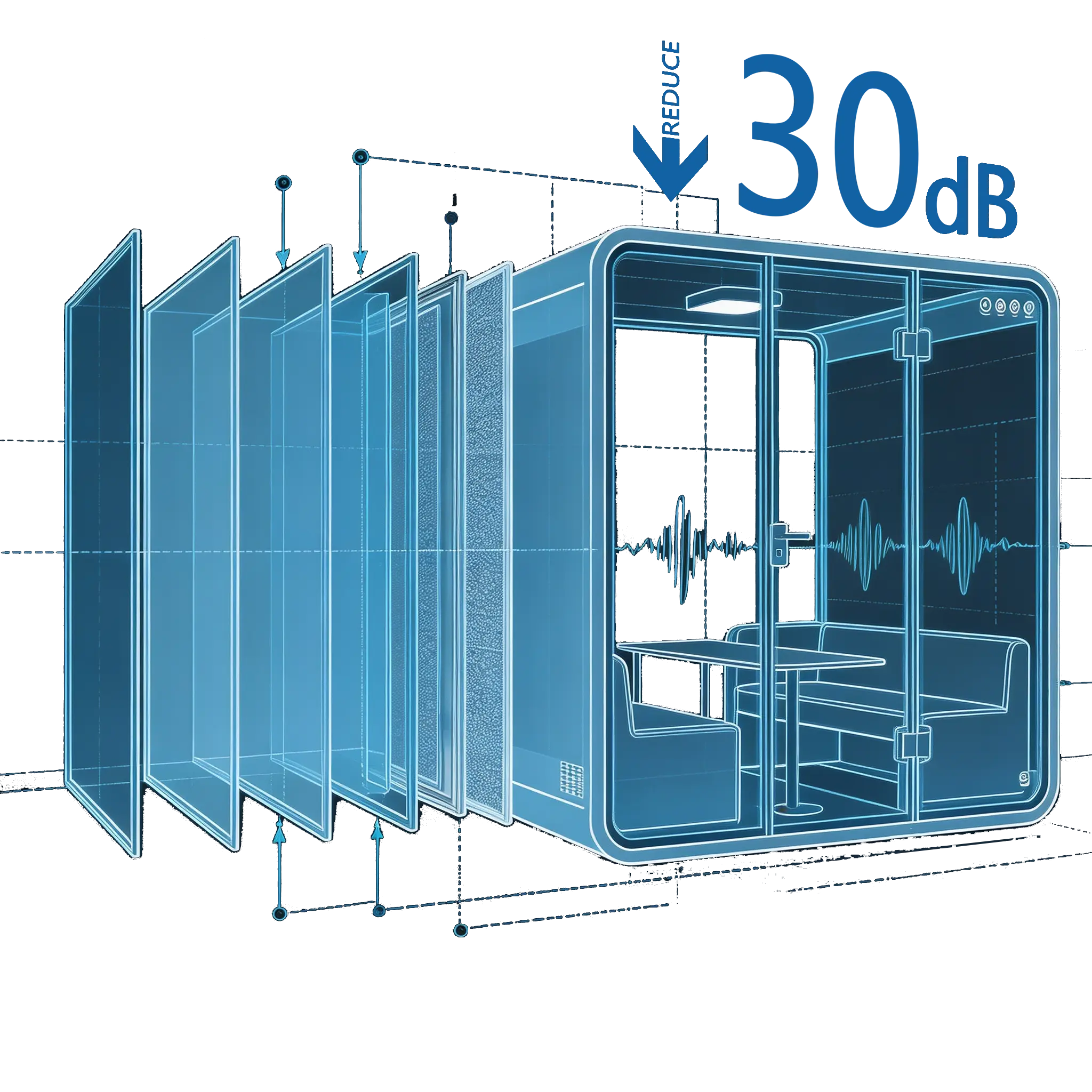
Inside the 30 dB Acoustic Core

Pods that sound right are built in layers. Double-sided acoustic panels with a 2mm polymer damping layer block airborne noise, a 5mm die-cast aluminum frame stops structural vibration, and a silent ventilation system refreshes the air without letting sound through. Miss one layer and the room leaks. The engineering below is what separates a pod that holds 35 dB on day one and on day one thousand from a booth that only looks the part.

01

Mass-loaded walls

One → S. Two → M. Four → L. Six → XL. Sizing up is cheaper than buying twice — most teams add a second, larger pod within a year, so leave room in the floor plan.

02

Fresh air, not noise

Calls suit an S, meetings an L, focused work an S–M, rest or nap use an L–XL. Match the pod to the job, not the other way around — the acoustic performance is identical across sizes.

03

Certified, not claimed

Every Prodec pod shares the same Rw+Ctr 35 dB core — independently lab-tested by Intertek — so quiet is not a series decision. It's a given, from the entry model up.

Inside Every Pod

The Acoustic Build — Layer by Layer

Acoustic performance comes from the system, not one material. Seven layers work together — compromise any one and the whole pod underperforms.

LayerMaterialWhy it matters
Frame5mm die-cast aluminum profileStructural integrity + Class A fire safety (non-combustible)
Wall & ceiling38mm double-sided acoustic modules + 2mm polymer dampingMass-loaded barrier — the primary sound-blocking layer
Glass10mm tempered glass (front & back)Sound insulation plus safety, with a quiet-fitted door frame
Interior12mm PET acoustic panelsAbsorbs internal reflections — no echo on calls
VentilationSilent turbo fan + PD sound-barrier ductFull air refresh in 2 minutes — air passes through, noise doesn't
Lighting4000K LED panelFlicker-free light, video-call ready
DoorQuiet lock + magnetic sealStops sound flanking — the classic weak point in budget pods

Safety

Low VOC, RoHS Compliant

European RoHS-compliant materials, no formaldehyde off-gassing — safe for long, enclosed sessions.

Fire

Class A Fire Rating

The all-aluminum structure is inherently non-combustible, meeting strict commercial building codes.

Certified

Intertek & TUV Tested

Third-party verified acoustics — CE and Intertek on every unit, NIC 32 + Singapore TUV report on the PC series.

30dB

Rw+Ctr Acoustic

2hrs

Assembly Time

4

Sizes · 1–6 People

1500+

Projects Delivered

Cost Guide

What Do Office Pods Cost?

From USD 1,400

EXW Foshan · Entry 1-Person Pod

Office pods start from USD 1,400 (EXW) for an entry 1-person pod, rising with size, series, and configuration. The biggest cost drivers are size, wall panel material, and finish options.

We quote, we don’t haggle: tell us your layout and headcount, and we’ll price it precisely in one working day — with volume pricing from 10 units and factory-direct terms on every order. That EXW figure covers the pod itself; freight, duty, and local delivery are quoted separately, so there are no surprises on the invoice.

Size

The dominant driver. A 1-person pod costs less than a 6-person one — plan for your real headcount.

Series

PE entry panels, PR standard, PC aluminum-honeycomb walls — materials set the acoustic ceiling and the price.

Custom colors

Eight standard finishes included; custom colors and branding available on request.

Furniture

Desks, chairs, and sofas are optional add-ons — configure around your scenario.

Quantity

10+ units unlock OEM customization and volume pricing, factory-direct.

Common Questions

Frequently Asked Questions

What is an office pod used for?

A freestanding, sound-insulated room used for private calls, focused work, interviews, and small meetings. Most customers install pods for solo deep work, confidential conversations, and huddles of two to six people — anywhere an open floor needs quiet on demand.

Are office pods actually soundproof?

No room is 100% silent — that's physics. What a Prodec pod delivers is speech privacy: independently tested by Intertek at Rw+Ctr 35 dB, so a conversation inside stays unintelligible outside. That's a measured figure, not a marketing estimate. The same physics applies to any enclosed space — block the walls, seal the door, manage the airflow — and the numbers follow.

How much does an office pod cost?

Pods start from USD 1,400 (EXW) for an entry 1-person unit, and rise with size, series, and configuration — a 6-person PC-series pod naturally costs more. Ask for a quote and we'll price your exact layout. Bulk orders bring the per-unit price down further.

How long does an office pod take to install?

About 2 hours with two people. The pod arrives flat-packed, assembles with hand tools, and needs no construction, permits, or floor anchoring. Power it on and it's ready for the first call.

Can office pods be relocated?

Yes. Dismantle, move, and reassemble — the pod keeps its certified 35 dB performance after every relocation, which makes it ideal for leased offices and growing teams. It also means pods hold their value when office layouts change.

Do office pods need ventilation or power?

Both come standard: LED lighting, a quiet ventilation system that refreshes the air every 2 minutes, and power and USB sockets. The only site requirement is a standard wall outlet; RJ45 data ports are included on the PC and PR series, and a no-drainage cold/warm air conditioner is available for hotter climates.

What's the difference between an office pod and a phone booth?

A phone booth is a 1-person space built for calls and quick focus. An office pod covers the wider range — one to six people, calls plus meetings — and is the general term for the category. If you only need solo calls, a phone booth is the efficient buy; if teams need to meet, a 1–6 person pod is the right choice.

Can I visit the factory or see one in person?

Yes. You're welcome at our 7,000 m² factory in Foshan, China, where you can walk the production line and test a pod's acoustics yourself. We can also arrange a visit to a completed installation near you, and video walkthroughs are available for overseas buyers.

Case Studies
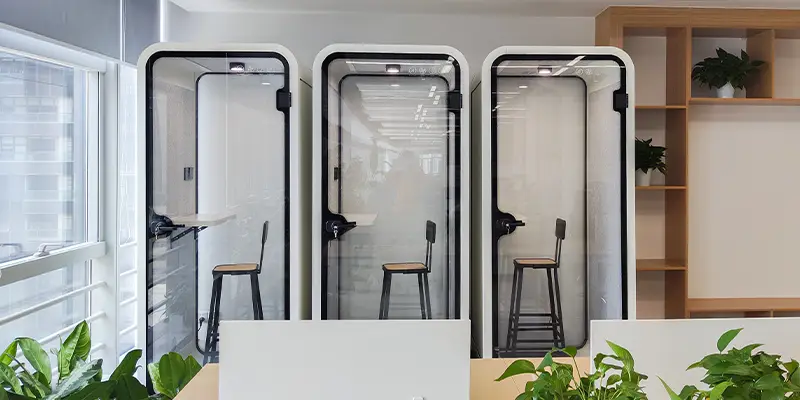
1500+ Projects Worldwide

From tech campuses to university libraries, teams choose Prodec for certified privacy without construction — and the projects below show how different industries put pods to work.

Shenzhen · Technology

Huawei

PC-series pods across the Shenzhen campus for focus work and small-team syncs — assembled floor by floor without interrupting operations, with custom interior finishes to match each building.

PC Series

S + M POD

Hangzhou · Fintech

Ant Group

PR-series pods for confidential stand-ups and ad-hoc team reviews in a high-density headquarters, where meeting rooms were booked out days in advance.

PR Series

Team Huddles

Oxford · Education

Oxford Saïd

Pods for quiet study and small-group work — acoustic privacy without touching the historic building fabric, installed in a single afternoon between teaching terms.

Education

Campus

1500+

Projects Delivered

39

Countries Served

7,000m²

Factory in Foshan

Next Step

Plan Your Quiet Office Project

Tell us your floor plan, headcount, and noise problem — we’ll recommend the right sizes, ship them flat-packed, and have them assembled the same day they arrive. Most buyers send a floor plan on Monday and have pods in place before the end of the month.