
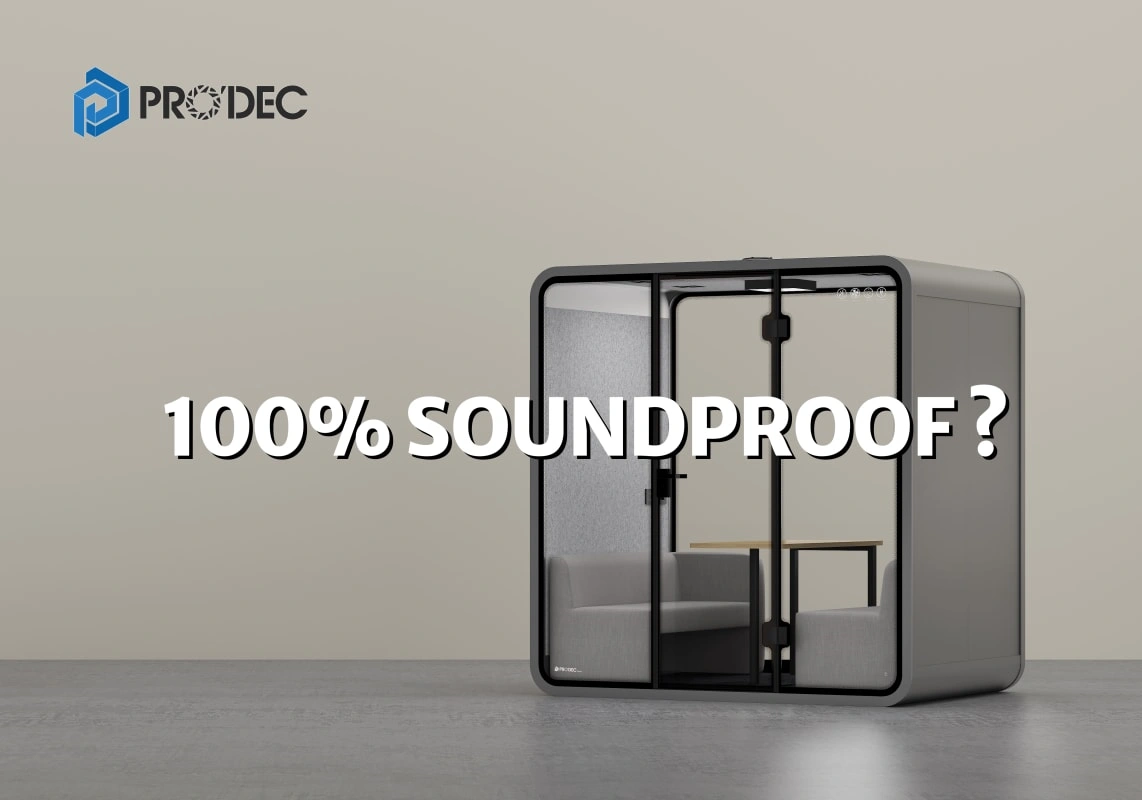
The Reality of a Soundproof Pod
When people hear the term soundproof pod, they often imagine a space where no sound can enter or escape. However, in real-world applications, achieving absolute silence is nearly impossible. Instead, acoustic booths are engineered to significantly reduce noise, creating a private and comfortable environment for work, calls, meetings, or study.
1. The Science of Soundproofing
Sound travels in waves through air, solid materials, and even building structures. To block sound completely, a booth would theoretically need:
- Infinitely thick walls
- No ventilation openings
- Perfectly airtight construction
Such conditions are not realistic for a functional workspace. Human comfort requires ventilation, electrical wiring, and accessibility, which inevitably create small sound transmission paths.
Anechoic Chamber Comparison
For reference, laboratories sometimes build anechoic chambers—specialized rooms designed to achieve near-total sound absorption. These spaces feature:
- Walls, floors, and ceilings lined with deep acoustic wedges.
- Floating floor systems that isolate vibrations from the building.
- Zero ventilation noise and completely sealed construction.
Inside, sound levels can drop below 0 dB, making even your own heartbeat audible. However, such environments are extremely expensive, impractical for daily use, and uncomfortable for long stays.
In contrast, a soundproof pod is not meant to create “absolute silence” but to reduce noise to a comfortable, private level suitable for calls, study, or focused work—balancing sound isolation with usability. If a small pod were built to achieve the same effect as an anechoic chamber, current technology would make it extremely bulky, visually unappealing, and impractical for modern office aesthetics and space efficiency, which is why soundproof pods are designed with a focus on both acoustic performance and elegant integration into workplace environments.
2. Sound Reduction vs. Total Silence
Instead of full silence, soundproof office pods are designed to achieve:
- 30–40 dB noise reduction → enough to block most office chatter.
- Acoustic isolation for focused work, phone calls, and online meetings.
- Speech privacy so conversations inside cannot be clearly understood outside.
👉 For example, someone talking inside a booth may sound muffled from outside, while the person inside can still faintly hear background noises.
3. Why This Level of Soundproofing Is Ideal
- Safety → Complete isolation could be dangerous in emergencies; some sound awareness is beneficial.
- Comfort → Ventilation systems must allow airflow, preventing airtight silence.
- Functionality → Pods are optimized for work use, not recording studios or military bunkers.
- Balance → Effective soundproofing + fresh air + lighting = practical workspace.
4. Real-World Examples
At universities, airports, and offices, soundproof booths provide:
- Quiet study rooms (students can focus without distraction).
- Private meeting pods (conversations stay confidential).
- Phone booths for offices (background noise cut down by 70–80%).
Even though not 100% silent, the pods create an environment that feels separate, private, and professional.
5. How to Explain to Clients
Instead of saying “complete silence,” it’s better to communicate:
- Our pods are sound-isolating, not sound-erasers.
- They block most disruptive noise and provide acoustic privacy.
- For everyday office and campus needs, this is the optimal solution.
Key Factors That Determine Acoustic Quality
That said, not all pods are created equal. It’s important to evaluate the real sound insulation performance when choosing a pod. High-quality manufacturers pay attention to critical design details such as:
- Seam sealing: Proper treatment at material joints to prevent sound leakage.
- Wall composition and infill: Use of professional acoustic materials inside the wall panels.
- Glass performance: The thickness and type of glass (laminated, double-glazed, or vacuum) can significantly influence sound reduction.
Some low-quality brands may overlook these aspects, leading to poor soundproofing performance that fails to meet user expectations.
Understanding 35dB Sound Reduction
When we describe a pod as providing 35dB of sound insulation, what does that really mean? Imagine an open office where background noise averages around 70dB — similar to normal conversation. Inside the pod, that noise would drop to around 35dB, comparable to the quietness of a library or a calm park. You might still faintly hear some ambient sounds, but they’re soft enough not to interrupt meetings, phone calls, or focused work.
The Design–Performance Balance
In short, the best soundproof pods find the perfect middle ground — excellent noise control, elegant design, and comfortable usability. Trying to achieve the same effect as a full anechoic chamber in a small pod would result in a structure that’s too thick, too heavy, and visually out of place for any modern workspace. Instead, the optimal approach is balancing acoustic performance with spatial aesthetics, ensuring both functionality and beauty.
Soundproof Pods Deliver What Matters Most
While a soundproof pod cannot promise total silence, it offers the right balance of noise reduction, comfort, and usability. They deliver what users truly need: a private, quiet, and productive space—without compromising safety or comfort.